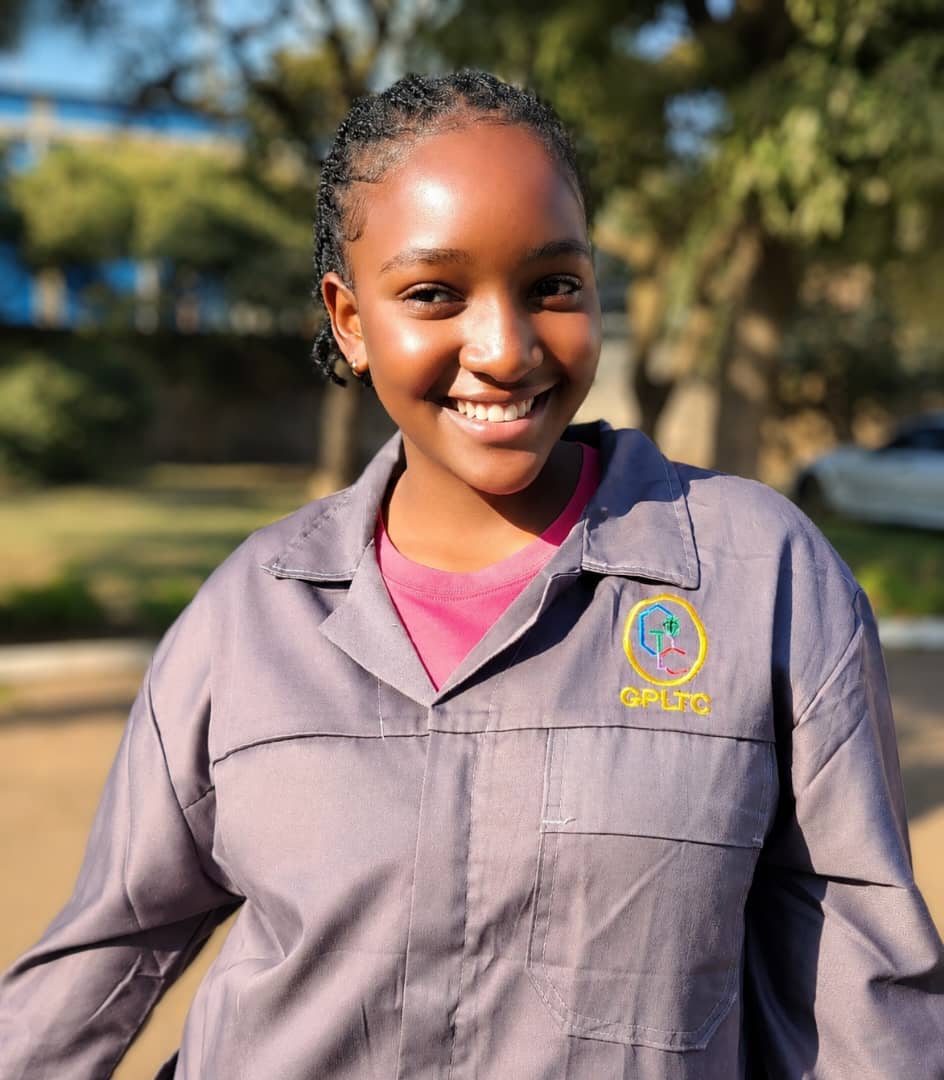

While much of Zimbabwe’s mining industry remains focused on extracting and exporting raw minerals, Aminah Ndlovu has chosen a different path. The 22-year-old entrepreneur is building a career around gemstone cutting and polishing, positioning herself at the forefront of efforts to ensure more value from Zimbabwe’s gemstones remains in the country.
Born in Nkayi and raised between Nkayi and Gwanda, Ndlovu grew up surrounded by mining communities. Yet instead of following the traditional route into extraction, she identified an opportunity further along the value chain.
She saw local miners selling rough gemstones at modest prices while foreign buyers and processors captured much of the final value through cutting, polishing and marketing.
“We need to move from being exporters of potential to becoming producers of finished products,” says Ndlovu.
Today, she is a director of Ruzhowa Lapidary Resources, one of a new generation of businesses focused on gemstone beneficiation and value addition.
Turning Training into Enterprise
Ndlovu’s entry into the lapidary industry began in December 2025 when she completed a Gemstone Cutting and Polishing Training programme at the Zimbabwe School of Mines, sponsored by the Minerals Marketing Corporation of Zimbabwe (MMCZ).
The training proved to be a turning point. Alongside fellow graduates, she helped establish one of four new lapidary enterprises that emerged from the programme, with Ruzhowa Lapidary Resources becoming her vehicle for building a career in gemstone processing and entrepreneurship.
Her skills development journey did not stop there.
In July and August 2026, Ndlovu joined a group of young Zimbabwean gemstone practitioners and members of the Women in Gemstone Association of Zimbabwe for an intensive five-week regional training programme in Zambia under the Gemstone Processing and Training Learning Centre (GPTLC).
The programme expanded her expertise in gemstone identification, grading, cutting, faceting and polishing.
Participants were trained to distinguish natural gemstones from treated stones, conduct specific gravity testing and apply the Mohs Hardness Scale. They also gained practical experience operating trim saws, faceting machines and polishing equipment used to transform rough stones into market-ready gems.
The Economics of Beneficiation
For Ndlovu, beneficiation is more than a technical process. It is an economic necessity.
She argues that Zimbabwe continues to lose significant value by exporting rough gemstones rather than finished products.
According to her, cutting and polishing can dramatically increase the value of a gemstone, sometimes by five to twenty times, depending on the quality of the stone and workmanship involved.
That means a gemstone sold for US$10 in rough form could potentially fetch as much as US$200 after processing.
The difference, she says, represents jobs, entrepreneurial opportunities and foreign currency earnings that should remain in Zimbabwe.
Her position aligns with growing calls within the mining sector for greater local processing of minerals before export, a strategy viewed as critical to industrialisation and economic diversification.
Building the Next Generation
Beyond her business interests, Ndlovu has become actively involved in developing young talent in the gemstone industry.
As a resource person within the Young Miners Foundation’s Gemstone and Lapidary Unit, she helps mentor aspiring lapidarists and supports programmes aimed at bringing young Zimbabweans into gemstone processing enterprises.
Through these initiatives, approximately 40 young people have been introduced to lapidary work and gemstone value-addition activities.
Her commitment to mentorship is driven by a belief that beneficiation can create opportunities for young people who may lack the resources to own mines but still want meaningful participation in the mineral economy.
National Recognition
Ndlovu’s growing profile has earned recognition within Zimbabwe’s mining sector.
Her gemstone artworks and portraits have been presented to senior mining industry leaders, while her work has also been showcased on a United Nations platform in Victoria Falls.
The Young Miners Foundation has further recognised her contributions by honouring her as an outstanding young lapidarist.
For many observers, Ndlovu represents a new generation of mining entrepreneurs focused less on extraction and more on innovation, skills development and value addition.
As Zimbabwe intensifies efforts to increase beneficiation across its mineral sectors, young professionals like Aminah Ndlovu could play a critical role in proving that the country’s wealth lies not only beneath the ground, but also in what is created from it after the minerals are mined.