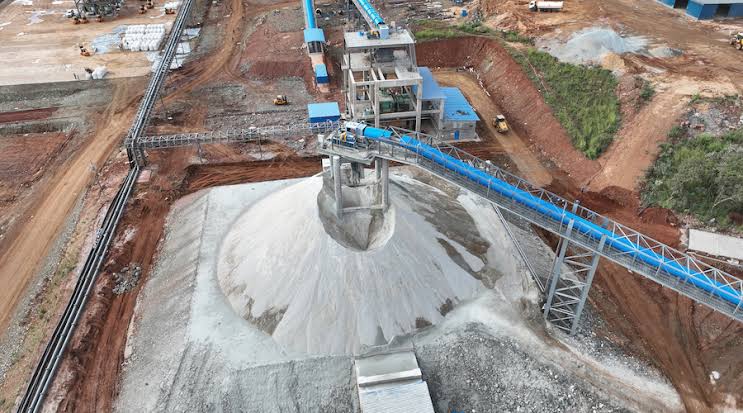

Zimbabwe’s ambitions to move from exporting lithium concentrates to manufacturing battery materials and eventually batteries themselves are set to face an early market test following the alignment of measures contained in ZERA’s new solar regulations and the 2027 National Budget.
The link between the two policies lies in the growing role of lithium batteries in the country’s renewable energy sector.
In the 2027 National Budget, presented by Finance Minister Mthuli Ncube on 19th November 2026, Government committed to intensifying value addition and beneficiation in the mining sector, highlighting progress in lithium processing, including the commissioning of a lithium sulphate plant. The budget also identified lithium-based products and batteries as part of the country’s future value-addition pipeline.
At the same time, Statutory Instrument 187 of 2026, the Energy Regulatory (Solar Products and Installation) Regulations, 2026, introduces strict standards for batteries and solar equipment sold in Zimbabwe, creating what industry observers say could become the first regulated domestic market for locally produced lithium batteries.
Published on November 20, 2026 and expected to take effect around May 2027, the regulations prohibit the importation, manufacture, sale, storage, display or donation of solar products that do not comply with Zimbabwe Standards and International Electrotechnical Commission (IEC) standards.
All solar panels, batteries, inverters, charge controllers, solar water heaters, solar lanterns and solar home systems must possess a Conformity-Based Certification Assessment (CBCA) certificate and be registered with the Zimbabwe Energy Regulatory Authority (ZERA) before entering the market.
For lithium batteries, the regulations require a minimum five-year warranty, while solar panels must carry a 10-year warranty. Inverters and charge controllers require a two-year warranty, solar water heaters five years and lead-acid batteries one year. Selling products without the prescribed warranty will constitute an offence.
The warranty requirement could become a crucial benchmark for any future battery manufacturing industry.
Analysts say a mandatory five-year warranty effectively forces battery suppliers to prove product quality, safety and durability, making it difficult for low-cost, untested products to compete solely on price.
The regulations are expected to remove a significant portion of substandard batteries that have entered the market in recent years, including products linked to premature failure, swelling and safety concerns.
That quality-focused approach mirrors Government’s beneficiation strategy outlined in the budget.
The budget proposes that export tax on lithium concentrate be calculated using the fair market value of equivalent recoverable lithium sulphate, while lithium sulphate itself will not attract export tax. The measure is intended to encourage investment in downstream processing rather than the export of raw or minimally processed minerals.
Zimbabwe’s lithium strategy has already attracted substantial investment into processing infrastructure as operators position themselves to move beyond concentrate exports. The commissioning of lithium sulphate production capacity marks a significant step in that process, with Government seeking to advance further into higher-value lithium products.
Industry stakeholders argue that while beneficiation plants can produce battery chemicals, a domestic battery industry requires a reliable local market capable of absorbing finished products.
S.I. 187 may help provide that market.
Under the regulations, suppliers of batteries will have to meet uniform standards regardless of whether the products are imported or manufactured locally. However, by eliminating non-compliant products, the regulations could create more favourable conditions for companies investing in certified battery production.
The law also formalises the installation side of the solar value chain.
Installers will be licensed by ZERA under four categories, from ST1 for small residential systems to ST4 for large commercial projects exceeding 50 kilowatts. Applicants must hold recognised technical qualifications, demonstrate installation experience and renew licences every two years.
Every solar installation must be accompanied by a Completion Certificate confirming compliance with technical and safety standards. Installers will also be required to notify ZERA and the relevant electricity distributor after completing installations.
ZERA has been granted powers to inspect shops, warehouses and business premises, seize non-compliant products and order their destruction at the expense of the seller. Complaints between consumers and suppliers or installers will also be adjudicated by the regulator.
The regulations arrive as Government pursues an ambitious renewable energy expansion programme.
The 2027 National Budget proposes duty rebates on renewable energy generation and energy-storage equipment and targets 558,335 new household electricity connections in 2027. Approximately 37% of those connections are expected to be provided through mini-grids and standalone solar systems.
That expansion is expected to increase demand for battery storage, potentially creating a sizeable market for lithium-based products at the same time Government is pushing for greater beneficiation and industrialisation.
For now, however, the success of both policies will rest on implementation.
For the mining sector, the key question is whether Zimbabwe can translate lithium beneficiation into battery manufacturing. For the solar sector, the challenge will be enforcing product standards consistently at borders, in warehouses and in retail outlets.
If both policies succeed, Zimbabwe could find itself with something it has long sought: a domestic market for batteries produced from lithium processed within its own borders.