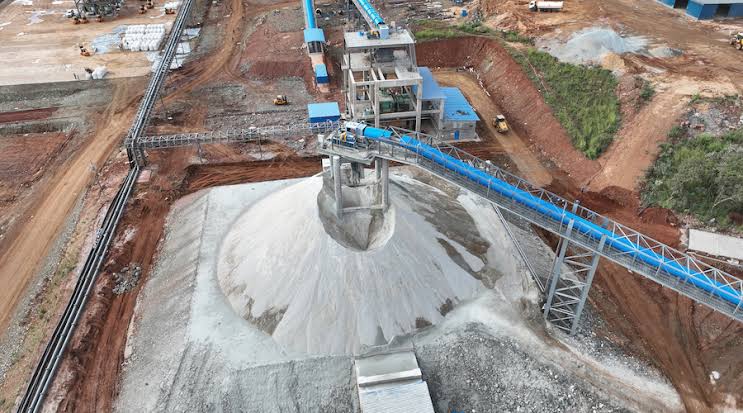

Zimbabwe’s strategy to move away from exporting raw lithium concentrates, towards lithium sulphate production has received support from The State of African Energy 2027 Outlook Report which identifies beneficiation as a key pathway for the country to extract greater value from one of its most strategic mineral resources.
The State of African Energy 2027 Outlook Report, the annual flagship publication of the African Energy Chamber produced in collaboration with S&P Global, identifies Zimbabwe as a leading lithium investment destination alongside Namibia and Mali, driven by growing demand for battery minerals used in electric vehicles, renewable energy technologies, artificial intelligence infrastructure and defence applications.
The report describes Zimbabwe’s lithium districts as among Africa’s most important critical mineral provinces, placing the country at the centre of supply chains supporting the global energy transition.
However, the report says Zimbabwe is not yet capturing the full benefits of its rising production.
Following significant Chinese investment in 2023, Zimbabwe became “China’s second-largest supplier of seaborne lithium concentrates (spodumene),” according to the report.
Despite that success, the country continues to earn significantly less for its exports than competing producers.
“Zimbabwe’s realized prices for these concentrates have been 30% to 40% lower than Australian equivalents,” the report states.
The report attributes much of the discount to “mineral leakage.”
“Due to structural gaps in mineral governance, specifically a lack of comprehensive geographical mapping and rigorous assay testing, high-value trace minerals like tin, samarium oxide, and NdPr oxide are inadvertently mixed into the exported spodumene uncompensated,” it says.
To address those losses, the report backs Zimbabwe’s beneficiation drive and its efforts to move further down the value chain.
“Zimbabwe is currently capping raw lithium concentrate exports to compel miners to build refineries,” the report says.
Rather than immediately requiring producers to manufacture battery-grade lithium carbonate or lithium hydroxide, the report recommends a phased approach focused on lithium sulphate.
“Rather than demanding fully refined lithium carbonate or hydroxide, which requires stringent purity controls, the intermediate goal is to produce lithium sulfate,” it says.
The report argues that lithium sulphate is a practical first step because it “requires lower capital expenditure and is significantly more tolerant to impurities.”
Zimbabwe has already begun implementing that model. Prospect Lithium Zimbabwe, operated by Zhejiang Huayou Cobalt at the Arcadia mine in Goromonzi, began exporting Africa’s first locally processed lithium sulphate in April 2026, while national output is projected to rise as new processing facilities come online.
The report says shifting to lithium sulphate production could help Zimbabwe create jobs, strengthen industrial capabilities and retain a greater share of the value generated by the global battery supply chain.
Yet it cautions that beneficiation alone will not guarantee success.
“Realizing this opportunity will require continued progress in governance, technical expertise, infrastructure and processing capabilities to support the development of globally competitive refining industries,” the report says.
It warns that stronger regulation, improved testing systems, reliable electricity supplies and major infrastructure investment will be needed if Zimbabwe is to build a competitive downstream lithium industry.
“Moving beyond raw extraction to local processing and beneficiation remains a key opportunity for African countries to create jobs, strengthen industrial capabilities and capture greater value from their mineral resources,” the report says.
For Zimbabwe, the report’s message is clear: producing lithium sulphate rather than exporting raw concentrates offers a realistic route to capturing more value, but success will depend on whether the country can develop the regulatory, technical and infrastructure foundations needed to support a globally competitive refining sector.