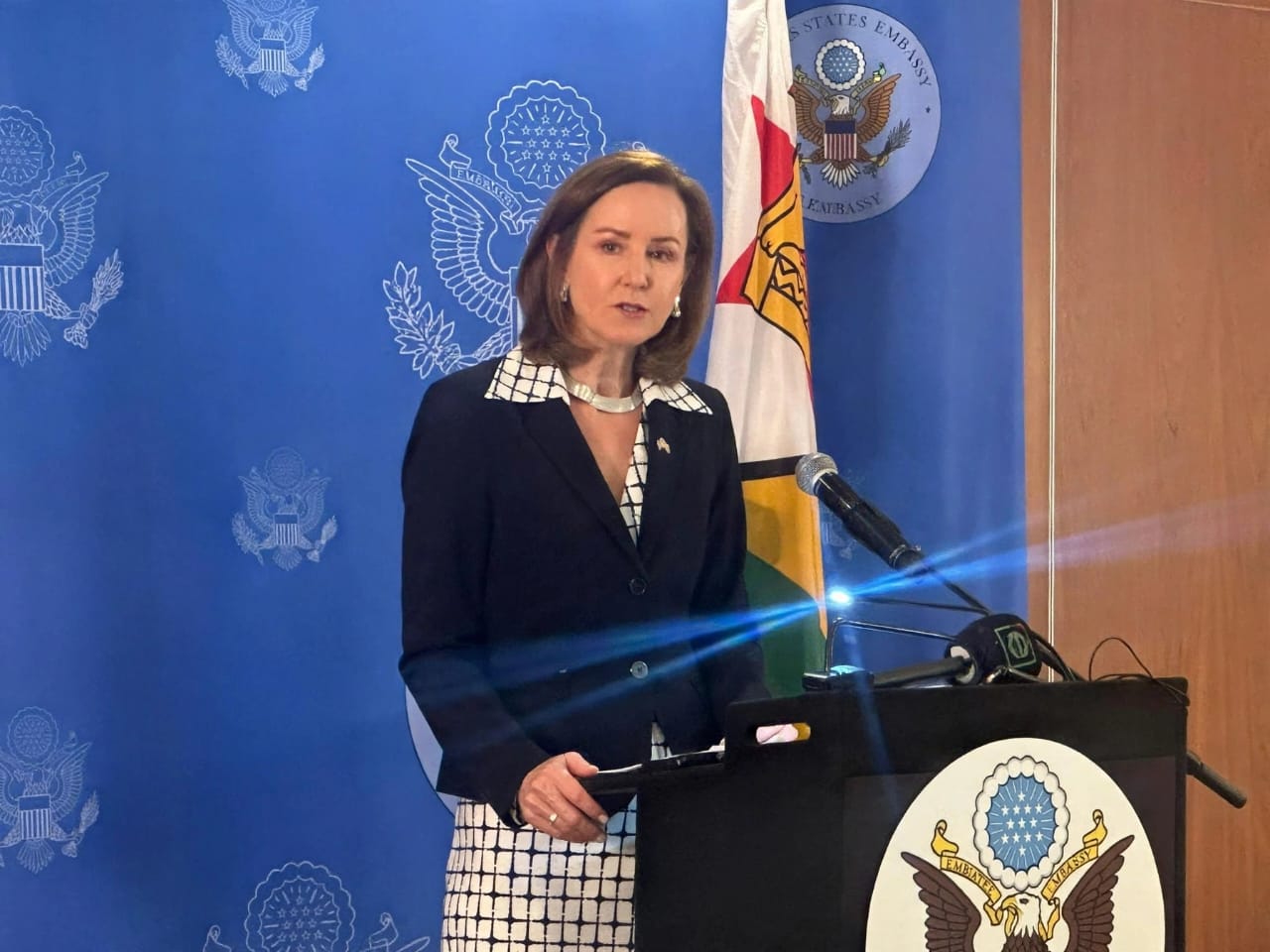

The United States has pledged to deepen cooperation with Zimbabwe’s mining sector and academic institutions, with US Ambassador to Zimbabwe Pamela Tremont emphasizing that skills development and strategic partnerships will be key to transforming the country’s vast mineral wealth into sustainable economic growth.
Speaking at a critical minerals dialogue hosted by the Harare Institute of Technology (HIT), Ambassador Tremont said Zimbabwe’s rich deposits of lithium, gold, chrome and other strategic minerals place the country in a strong position as global demand for critical minerals continues to rise.
“Zimbabwe has vast mineral resources that are critical as the world pursues strategic supply chains to support advanced manufacturing. That’s why we call them ‘critical minerals’,” said Ambassador Tremont.
She said mineral deposits alone were not enough to generate maximum economic benefits.
“But deposits alone don’t create value. People with expertise, experience, and partnerships do. A skilled workforce makes extraction, processing, value addition, and local industry possible,” she said.
Ambassador Tremont noted that as demand for critical minerals accelerates worldwide, Zimbabwe will need to strengthen its technical capacity and industrial capabilities to fully benefit from the opportunity.
“As global demand for these minerals grows, countries like Zimbabwe will need to consider how best to respond to that demand and how best to ensure Zimbabweans have the skills, technology, and partnerships necessary to turn its mineral deposits into national prosperity, including by moving beyond extraction up the mineral value chain,” she said.
She acknowledged Zimbabwe’s recent success in gold, lithium and chrome mining, but said the country’s future competitiveness would depend on the quality of its workforce and its ability to build value-added industries.
“As the sector grows, and as Zimbabwe moves up the beneficiation value chain, the skills and expertise of Zimbabwe’s mining workforce at all levels will be the driver of that progress,” Ambassador Tremont said.
The ambassador highlighted the role of local institutions, including HIT, the University of Zimbabwe and the Zimbabwe School of Mines, in developing the engineers, geologists, technicians and policymakers required to support the country’s mining ambitions.
“The people here in this room are fundamental to Zimbabwe’s mining sector success. HIT, the University of Zimbabwe, the Zimbabwe School of Mines, and institutions across the country will train the engineers, geologists, technicians, and policymakers who will shape the future of mining in Zimbabwe,” she said.
Ambassador Tremont also reaffirmed Washington’s interest in strengthening academic, research and industry linkages with Zimbabwe.
“The United States wants to be your partner in that work. We seek reliable, secure, and transparent critical minerals supply chains,” she said.
“We want to find more opportunities for American companies, universities, and researchers to work with counterparts around the world, and right here in Zimbabwe.”
She cited the partnership between HIT and American institutions through the Fulbright Programme as an example of how academic exchanges can evolve into long-term collaborations that support research, curriculum development and workforce training.
Looking ahead, Ambassador Tremont said the US Embassy would review ideas emerging from the dialogue and explore opportunities to connect Zimbabwean institutions with partners in the United States.
“The bottom line is the United States and Zimbabwe both benefit when Zimbabwe’s minerals sector is built on strong skills, sound standards, and trusted partnerships. Today was a step in that direction,” she said.
The remarks come as Zimbabwe intensifies efforts to promote mineral beneficiation and value addition as part of its broader industrialisation strategy, particularly in lithium and other critical minerals that are attracting increasing global attention.