
The planetGOLD Zimbabwe project officially launched its second annual stakeholders’ conference at the Cresta Lodge in Msasa today, convening government officials, mining experts, and development partners to accelerate de-mercurisation and formalisation of the country’s artisanal and small-scale gold mining (ASGM) sector.
The two-day summit, running from October 28 to 29 under the theme “Unlocking Responsible Gold Mining in Zimbabwe: Formalization, Financing, and Technology for a Mercury-Free ASGM Sector,” comes at a critical juncture for the local mining industry.
Small-scale and artisanal miners currently produce a record 75 percent of Zimbabwe’s total gold output, significantly outperforming large-scale commercial operations.
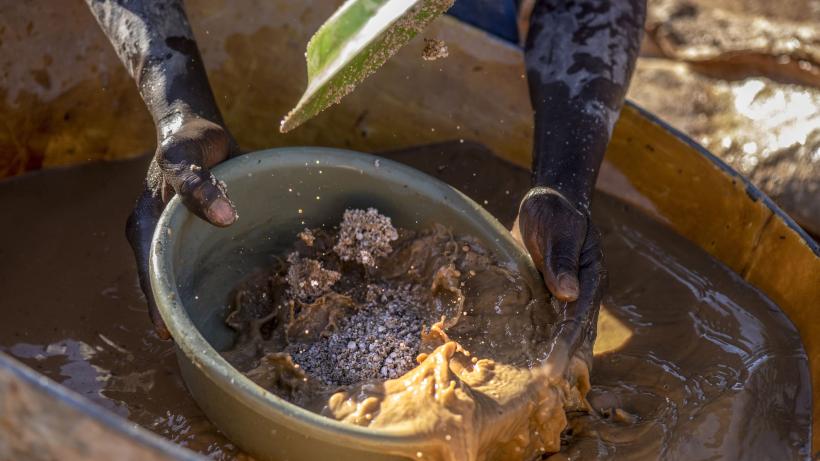
Despite anchoring national gold production, the vast majority of artisanal miners operate informally as survivalist entities, facing severe capital constraints and heavily relying on toxic mercury for gold processing.
Launch of the Formalisation Roadmap
A central highlight of the conference opening was the official launch of a new policy document, A Guide to Reforming Formalization of the Artisanal and Small-Scale Gold Mining Sector in Zimbabwe.
The framework outlines a strategic shift away from punitive regulatory enforcement toward a development-led model. The roadmap establishes data-driven legal reforms, advocates for differentiated licensing tiers, and introduces transitional safeguards designed to lower the barrier to compliance without criminalising miners.
Crucially, the document ties legal formalisation directly to financial inclusion, noting that regulatory compliance is unsustainable without access to formal banking.
The guide proposes structured credit lines, loan guarantee schemes, and dedicated financial products tailored specifically to small-scale miners.
Building Bankable Mining Enterprises
To transition miners from subsistence digging to profitable, structured business operations, planetGOLD announced an ongoing initiative to improve the investment readiness of 20 pilot artisanal mining groups.
Through a newly established Mining Academy, operators are undergoing intensive training in business planning, financial management, and geological asset mapping.
By fostering formal gold delivery records through Fidelity Gold Refinery (FGR), the project aims to help small-scale operators secure commercial capital.
Additionally, policymakers at the conference are reviewing structured pilot partnerships to enable formal co-existence agreements between artisanal mining groups and large-scale, large-concession holders.
Addressing the Mercury Crisis
The conference has dedicated significant technical sessions to eliminating mercury from the gold supply chain.
Current environmental data reveals that mercury is utilized at over 96 percent of artisanal mining sites in Zimbabwe.
The practice poses acute health and environmental risks, disproportionately impacting women who comprise a significant portion of the mineral processing workforce.
Delegates from international donor agencies, the Ministry of Mines and Mining Development, and the Environmental Management Agency (EMA) are using the summit to review scalable, mercury-free processing technologies and processing centers to comply with the Minamata Convention on Mercury.
Institutional Framework
The planetGOLD Zimbabwe project is a five-year initiative funded by the Global Environment Facility (GEF).
The programme is led by the United Nations Environment Programme (UNEP) and executed by IMPACT, an international non-governmental organization, in partnership with the Government of Zimbabwe.
Over its lifespan, the initiative aims to directly assist 7,500 miners across 11 target districts, with a ultimate mandate to eliminate 4.85 tonnes of toxic mercury from the environment.