


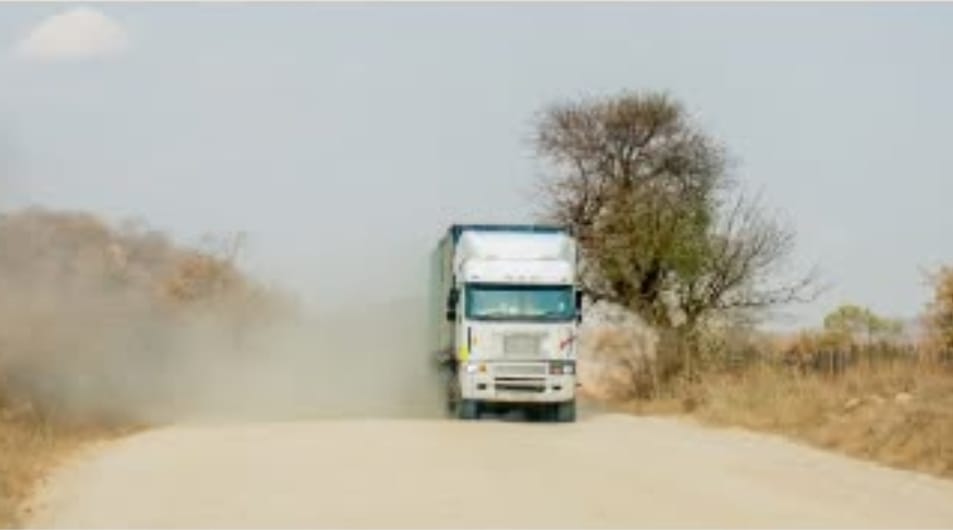

A young girl in a Mukwasi Primary School uniform turns away from the road, covering her face with a pink cloth as a passing truck sends a cloud of dust into the air, she slows down, waits for the dust to settle and continues her journey home.
For children like her, this has become part of everyday life along the 35-kilometre road linking Gaza Rural Service Centre to the Sabi Star lithium mine in Buhera.
Operated by Max Mind Investments, in which China’s Chengxin Lithium Group holds a controlling stake, Sabi Star combines open-pit mining with an on-site flotation plant that began operating in 2023.
The operation covers 40 rare-metal mining claims spanning about 2,637 hectares, although only five claims have confirmed resources and many of the remainder are still under exploration.
Ore extracted from the pit is crushed, milled and processed by flotation into spodumene concentrate for onward transport.
Chengxin states this operation has capacity to process about 990,000 tonnes of raw ore and produce roughly 290,000 tonnes of lithium concentrate a year, meaning large volumes of material and supplies must move between the mine and regional transport corridors by road.
It is these roads where hour after hour, heavy trucks ferrying lithium from the mine pass through communities, leaving behind clouds of dust that settle on homes, vegetation, buildings and solar panels.
For residents of Mukwasi and surrounding villages, the dust has become an unavoidable presence. A community village health worker, Senzeni Taruwona said there was little escape, even inside their homes.
“Whether you are outside or inside the house, there is no difference. The fine sand particles find their way into closed homes. Even when food and water are covered, the dust gets into everything. It settles on blankets and surfaces, making it difficult to breathe fresh air.
“It means even when we are sleeping, we inhale and ingest a lot of dust,” she said. Taruona said dust-related complaints were becoming increasingly common, particularly among children and elderly residents.
“Dust-related illnesses are on the rise in the village, particularly among school children and the elderly. We get about two or three patients every day complaining of chest pains or flu.
But we cannot do advanced screening because there are no X-ray machines. Most people cannot afford to proceed to the hospital, so they do not get accurate diagnoses,” she said.
For another resident living along the road, the immediate concern is not what the community may eventually receive from the mine, but the condition of the road itself.
“The situation here has gotten out of hand. The dust pollution is extremely bad. The lithium is theirs, but they should consider tarring the road to protect people’s health,” he said. – CNRG


