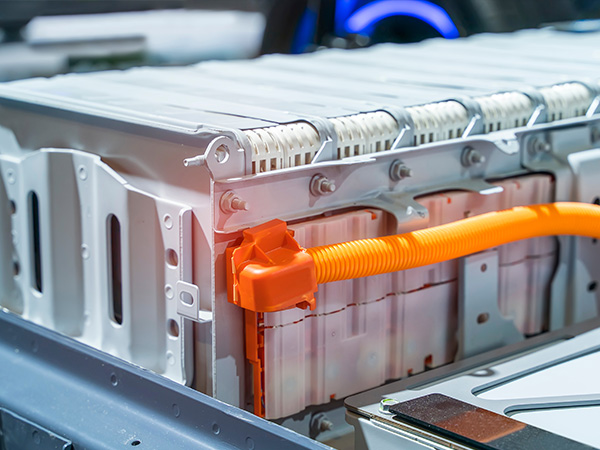

Energy and Power Development Minister July Moyo says Zimbabwe’s growing lithium processing capacity presents a major opportunity to establish a domestic battery manufacturing industry, positioning the country to capture greater value from its vast critical minerals resources.
Addressing the 9th Session of the International Solar Alliance (ISA) Assembly in New Delhi, Minister Moyo highlighted Zimbabwe’s progress in mineral beneficiation, particularly its achievement in processing lithium ore into lithium sulphate, a key precursor in battery production.
“Zimbabwe is the only African country which has started processing lithium ore to lithium sulphate, which presents opportunities for scaling up to battery manufacturing,” said Minister Moyo, calling on private sector investors to participate in the country’s emerging battery value chain.
The development forms part of Zimbabwe’s broader strategy to move beyond the export of raw minerals and build downstream industries capable of producing higher-value products for global clean energy and electric vehicle markets.
Alongside its industrialisation agenda, Zimbabwe is also accelerating investments in renewable energy infrastructure.
Minister Moyo announced that the country is targeting an increase in installed renewable energy capacity from 1,282 megawatts in 2025 to at least 2,640 megawatts by 2030, with solar energy expected to drive much of the expansion.
The planned growth would raise renewable energy’s contribution to Zimbabwe’s electricity supply to approximately 49 percent and support government efforts to achieve universal access to electricity by 2030, up from the current national access rate of 62 percent.
“Zimbabwe attaches great importance to its partnership with the International Solar Alliance as a strategic vehicle for advancing energy security, sustainable economic development and universal access to modern energy,” Minister Moyo said.
To support the transition, government is offering a range of investment incentives, including duty exemptions on solar equipment and batteries, net-metering arrangements, Prescribed Asset Status and project support agreements designed to reduce investor risk.
Minister Moyo identified affordable financing, solar generation and storage, rural electrification, solar-powered agriculture, policy reforms and skills development as key areas where Zimbabwe is seeking deeper collaboration with the International Solar Alliance.
Zimbabwe’s partnership with the ISA has already yielded tangible outcomes, including the establishment of the STAR-C Centre at Chinhoyi University of Technology, which focuses on solar research, skills development, equipment testing and standards certification.
The country is also implementing the Presidential Solarisation Programme, which aims to deploy 1.2 million decentralised solar systems by 2030. In parallel, the Rural Electrification Agency is advancing plans for 440 solar mini-grids to expand electricity access in underserved communities.
Government also plans to electrify all rural schools, clinics and public institutions by 2027 while rolling out solar-powered water systems to more than 35,000 villages under the national borehole drilling programme.
While acknowledging that some projects have progressed slower than anticipated, Minister Moyo called for increased concessional financing, stronger participation from pension funds and enhanced risk-mitigation mechanisms to accelerate implementation.
“Our measure of success must ultimately be the additional megawatts installed, investments mobilised, communities electrified, irrigation schemes powered, jobs created and productive enterprises nurtured and supported,” he said.
The minister said Zimbabwe remains committed to working with international partners to convert renewable energy ambitions and mineral beneficiation gains into sustainable industrial growth and long-term economic development.