



The landscape of Zimbabwean mining is shifting as new pre-feasibility updates breathe fresh life into the Dokwe Gold Project, located in the Matabeleland North province.
Spearheaded by Ariana Resources through its subsidiary, Rockover Holdings, the revised Pre-Feasibility Study (PFS) charts a clear, long-term excavation timeline that transforms the Dokwe North and Central deposits into a significant future contributor to the nation’s precious metals sector.
According to the updated operational strategy, the project is designed around a conventional load-and-haul open-pit mining structure divided into two targeted zones.
The larger Dokwe North deposit will be excavated across four distinct stages to systematically expose the ore body, while the smaller Dokwe Central deposit will run concurrently as a simpler, single-stage open pit.
Together, these open-pit operations are scheduled to sustain active mining for a 12-year primary phase, extracting a combination of oxide, transitional, and fresh gold ore.
Once active excavation concludes at the end of the twelfth year, the project will transition into an 8-year stockpile processing phase.
During this time, lower-grade ore accumulated during the initial mining years will be fed through the processing plant, extending the total mine life to 20 years.
Throughout its operating lifespan, the site is projected to produce an average of roughly 80,000 ounces of gold per year, with output peaking near 100,000 ounces annually during high-grade extraction cycles.
With the pre-feasibility updates solidifying the excavation blueprint, the development timeline is moving forward rapidly.
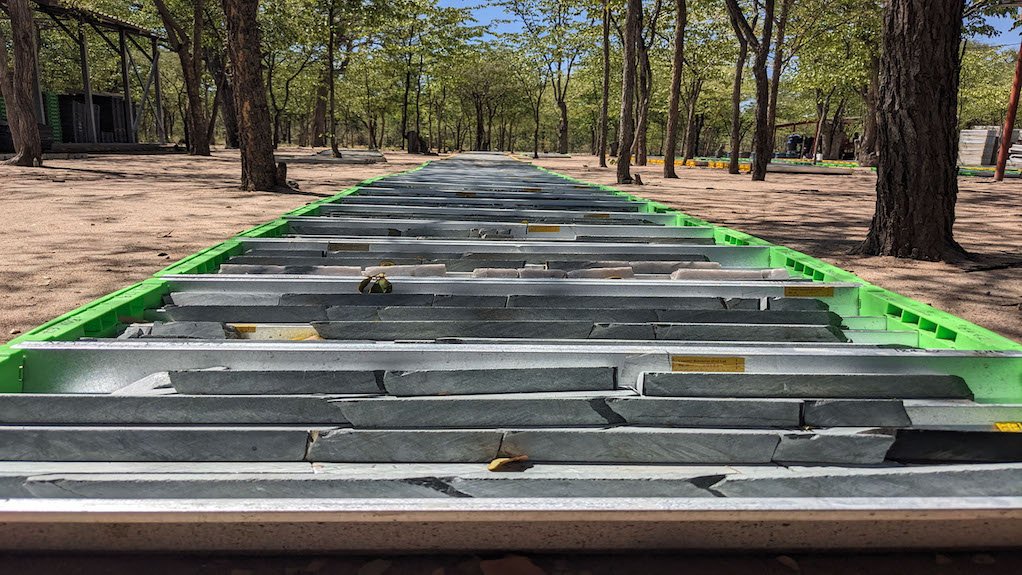
A 3,700-meter diamond drilling and geotechnical data collection program is currently underway to optimize the open-pit wall angles and confirm metallurgical recoveries.
These findings will directly feed into a Definitive Feasibility Study (DFS) scheduled for completion in the first quarter of 2027, paving the way for construction and putting Dokwe firmly on track to achieve its first commercial gold production by 2028.


