


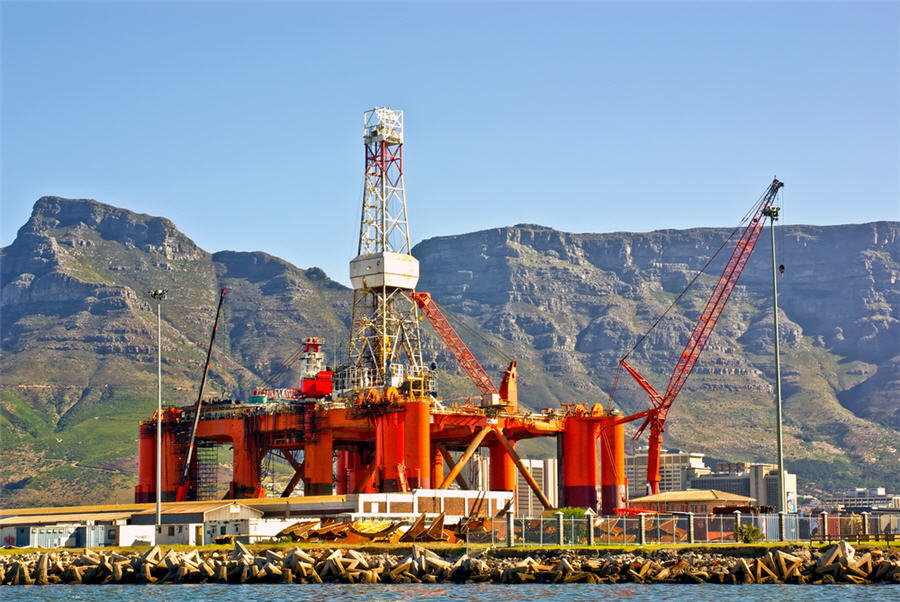

South Africa plans to increase its strategic oil reserves for the first time since the apartheid government stockpiled crude, adding to measures across the continent to mitigate supply shocks.
The Department of Mineral and Petroleum Resources proposed that 60 days of demand be covered by reserves, of which about two-thirds will be crude and the remainder oil products, according to a draft policy document published July 9 for public consultation.
That would amount to about 36 million barrels, worth billions of dollars, based on US Energy Information Administration estimates that put South African demand at 600,000 barrels per day. Licensed wholesalers and importers would be required to keep 21 days of inventory under the plan. The reserves would be managed by the state-owned South African National Petroleum Co.
The National Treasury and the SANPC “will develop financing mechanisms and instruments for the financing and guaranteeing strategic petroleum stocks,” the department said.
South Africa last built up its emergency stocks in the 1970s, when the United Nations imposed sanctions on the state due to its policy of institutionalized racial segregation, leading to the construction of the 45 million-barrel Saldanha Bay storage hub on the Atlantic coast. Supply concerns and price hikes caused by the US-Israeli war on Iran war have revived the original purpose of the facility: to act as a buffer from extreme oil-supply shortages.
The conflict in the Middle East triggered a surge in global fuel prices and a search for alternative suppliers. Some African governments cut taxes and dipped into their budgets to help cap prices.
More permanent measures aimed at bolstering infrastructure are emerging, aimed at giving governments greater control over oil supplies and reducing their reliance on trading companies.
Morocco announced plans in June to invest $641 million to develop fuel-storage facilities, Uganda will expand a state-owned terminal to stabilize supply, while Ghana plans to use more domestic crude in its refineries.
Billionaire Aliko Dangote, whose Nigerian refinery ramped up output just as the Persian Gulf conflict started, has launched a number of projects across the continent, including building another plant of the same design in Kenya to storage facilities in The Gambia.
Reserves sold
In the three decades since South Africa’s first democratic elections in 1994, the government has wound down its strategic stocks, including the sale of 10 million barrels in 2015 when prices were at an eight-year low. That deal was eventually found to be unlawful.
South Africa has become increasingly dependent on fuel imports as about half of its refinery capacity shut down in recent years, with the approach of new low-sulfur fuel standards in July 2027 that require greater investment in aging plants.
South African lawmakers last year determined the state’s stockpiles to be insufficient — an official estimate in March put crude reserves at 8 million barrels. The country currently requires 10 million barrels to replenish sold or rotated stock, in addition to storage infrastructure costs, according to the draft policy.
Dependence on shipping supply chains and exposure to maritime chokepoints — such as the Strait of Hormuz, where traffic has slowed because of the Iran war — exposes South Africa’s economy to 1 billion rand ($61 million) in losses for every day that fuel is unavailable, according to the department that was previously known as the Department of Mineral Resources and Energy. – (mining.com)


