


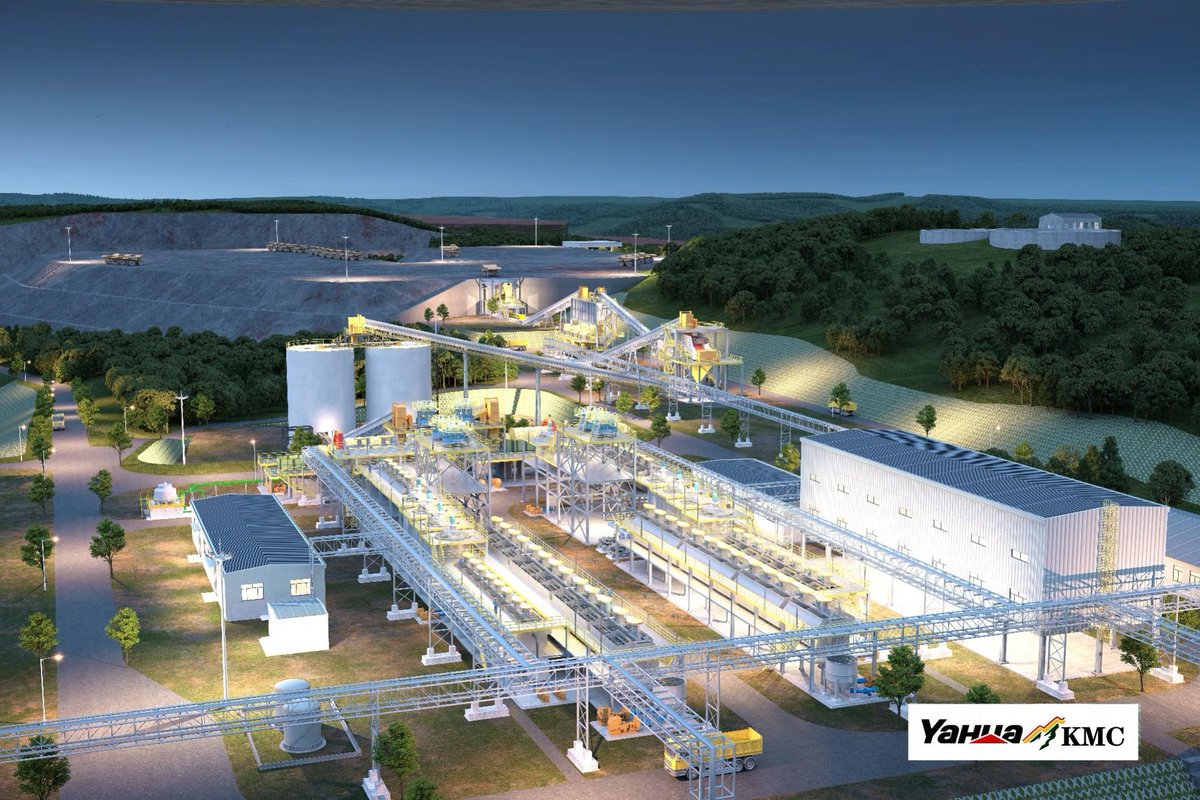

Kamativi Mining Company (KMC) says Zimbabwe’s push for lithium beneficiation must consider the realities of each mine.
Zimbabwe has given lithium miners until January 2027 to move beyond producing concentrates to higher-value lithium sulphate.
Kamativi, formerly a tin mine, is now producing lithium from old dumps and an open-pit operation under China’s Sichuan Yahua. The company is investing US$200 million in a lithium sulphate plant, expected to start production in July 2027 with an annual capacity of 75,000 tonnes.
“Our design has been done and equipment has been manufactured and is on its way,” Kamativi COO Turkey Liang told Parliament’s Portfolio Committee on Mines during a mine visit.
But Liang cautioned that not every miner has the scale or resources to justify further processing. “Not every miner, not every company has the capacity to do further value addition,” Liang said, adding that each operation must be treated based on its scale, and the economics of each mine.
He said Kamativi’s open-pit reserves could support about five years of mining, while current resources could extend the mine life to around 10 years before underground mining becomes more technically challenging and costly.
The company is also developing projects to recover tin, tantalum, niobium and amblygonite.
Zimbabwe has become a major African lithium producer following a wave of investment in hard-rock mines and processing plants.
The country is now seeking to capture more value locally by restricting the export of lithium concentrates and demanding that producers move into higher-value products.
However, capacity is still limited for more processing, and operators say costs are too high.
Huayou’s Prospect Lithium exported Africa’s first lithium sulphate earlier this year, after completing a US$400 million processing plant at Arcadia.
Zimbabwe exported about US$50 million of lithium sulphate in June 2026, taking first-half exports to roughly US$62.7 million, after the first US$12.6 million shipment was recorded in April. – (NewZWire)


