



By Lucy Tandi – Monday 14 June 2021
LOCAL – HARARE (Mining Index) – SMALL-SCALE women miners in Zimbabwe have in recent years been exposed to Mercury (Hg) during gold production, posing serious health challenges to their well-being and the environment.
The gold mining sector in Zimbabwe remains detrimental to women and the environment in multiple ways, in both the short and long-term.
Mercury is a very toxic, naturally occurring metallic element, which at room temperature and in its pure form occurs as a silvery-white liquid.
Zimbabwe has been classified among the top 10 countries using mercury in gold production.
In October last year, Zimbabwe Miners Federation (ZMF) chief executive officer Wellington Takavarasha revealed that a maximum of 66 tonnes of mercury is estimated to be used by the Artisanal and Small-scale Miners (ASM) during gold production per annum during peak mining periods, projecting 1-3 grams of mercury is lost to the environment for every gram of gold produced.
Conservative estimates indicate the presence of more than eight million artisanal miners in Africa, according to UNECA and the African Union Commission.
2020 statistics reveal that Women miners account for 50 percent of the artisanal and small-scale mining workforce in Africa, noted World Bank in its Gender Dimensions of Artisanal and Small-Scale Mining.
This means that women miners in Zimbabwe are using approximately of 33 tonnes of mercury per annum.
Conclusively, women thus make up at least four million of the artisanal miners on the continent prone to the effects of mercury.
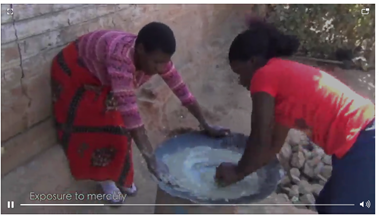
A case study in Zimbabwe’s Midlands province has shown how women are using mercury in gold mining without any protective mining wear.
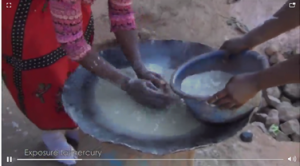
A visit to Bidhi compound in Kwekwe revealed shocking evidence of women gold miners handling mercury with bare hands, exposing their families to the effects of mercury which can enter the human body through the mouth, nose, eyes and skin. Very little enters the body after swallowing small amounts of elemental mercury, whereas after breathing elemental mercury vapour about 80 percent enters the blood from the lungs.
‘We have discovered over a thousand plus women in Bidhi compound in Kwekwe using mercury with their own bare hands. This may have toxic effects on the nervous, digestive and immune system,’ said Blessing Hungwe, a leading miner in Zimbabwe.
Dangers of mercury to human health include loss of peripheral vision, lack of coordination, impairment of speech, hearing, walking, muscle weakness and insomnia. Mercury also affects foetus when exposed to pregnant women and also affects new babies.
While the Minamata Convention on mercury came into being to protect human health and the environment from emissions and releases of mercury and mercury compounds with the aim to enhance the reduction of mercury pollution over the next few decades, effecting the guidelines of this international treaty remains a dream among Zimbabwean women miners who have ignored warnings on the harmful effects of mercury due to economic hardships in Zimbabwe.
‘What you have seen us doing is exactly what we do. We actually touch mercury for us to be able to extract the gold. We would like to get help, but this is our source of livelihood. I am a widow, I have children and grandchildren I have to support. I cannot stop mining gold as I have no other option to survive,’ said one widow mining gold in Bidhi.
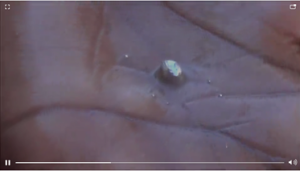
A gold nugget obtained after using mercury
‘These are the low hanging fruits that are enabling them to survive. They do not care what is going to happen to their health in the next 20 years because it’s a bread and butter issue. They are so concerned and worried. You cannot stop them, but rather provide them with an alternative because stopping them is cutting off their livelihood. There is no other means of income for them,’ said Hungwe. ENDS// www.miningindex.co.zw
Twitter @IndexMining Facebook @MiningIndexNews LinkedIn @MiningIndex


