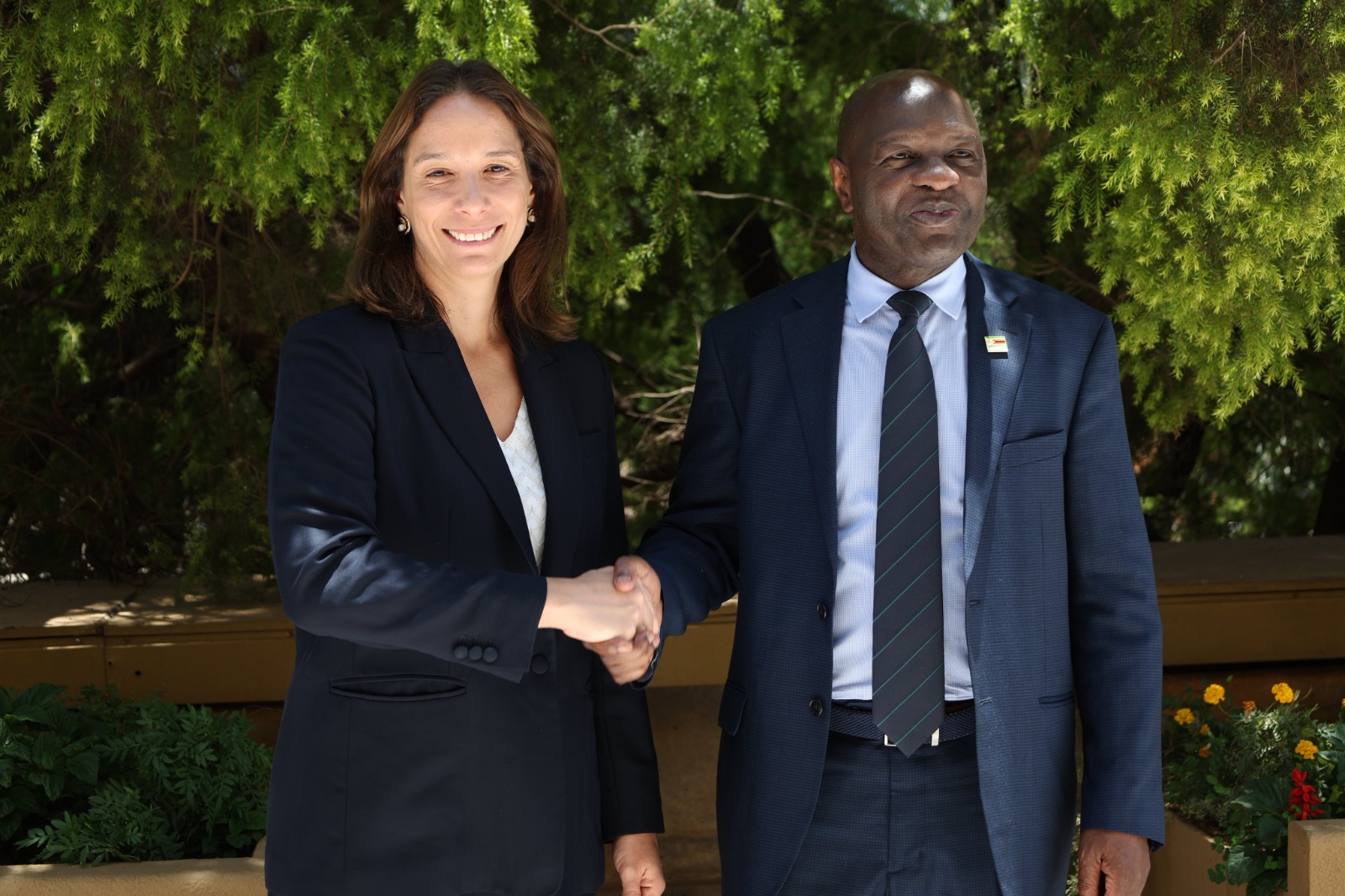

Zimbabwe and the European Union (EU) have reaffirmed their commitment to expanding economic cooperation, with the mining sector expected to play a central role in driving investment, industrialisation and value addition under the country’s “Zimbabwe is Open for Business” policy.
The commitment was made during the Zimbabwe-EU Partnership Dialogue held in Harare, where officials from both sides discussed opportunities to deepen trade and investment relations and unlock greater economic benefits from Zimbabwe’s vast natural resource base.
The dialogue was co-chaired by Secretary for Foreign Affairs and International Trade, Ambassador Albert Rangani Chimbindi, and EU Head of Division for Southern Africa and the Indian Ocean, Carolina Cordeiro.
Speaking during the meeting, Ambassador Chimbindi said Zimbabwe remains committed to building international partnerships based on mutual respect, sovereign equality and shared economic interests.
“Our aim is to pursue this partnership in order to produce tangible mutual benefits for our peoples,” he said.
He underscored the country’s economic diplomacy agenda, which prioritises trade, investment and productive partnerships over aid.
“Our national approach is to give pride of place to trade rather than aid,” said Ambassador Chimbindi.
The dialogue comes at a time when Zimbabwe is intensifying efforts to maximise value from its mineral resources through beneficiation and local processing. Government has already announced plans to prohibit the export of raw lithium concentrates from January 2027, compelling producers to process the mineral locally into higher-value products such as lithium sulphate.
The policy is part of broader efforts to position Zimbabwe as a regional hub for mineral value addition and attract investment into downstream industries linked to lithium, platinum, gold and other strategic minerals.
On her part, Cordeiro highlighted growing economic engagement between the EU and Zimbabwe, noting that trade volumes continue to increase and that Zimbabwe enjoys duty-free and quota-free access to European markets under the Economic Partnership Agreement.
She said the EU was keen to strengthen investment relations and support projects capable of creating employment and driving sustainable economic growth.
“We want our investment to create jobs and prepare prosperity in Zimbabwe, particularly unlocking opportunities for the youth,” said Cordeiro.
The EU has increasingly identified critical minerals as a strategic area of cooperation with resource-rich countries, making Zimbabwe’s vast reserves of lithium and other battery minerals an area of growing investor interest.
The partnership dialogue also explored opportunities for enhanced collaboration aimed at improving market access, promoting sustainable investment and strengthening long-term economic cooperation.
For Zimbabwe, the engagement aligns with ongoing efforts to attract capital into the mining sector, expand mineral beneficiation and leverage international partnerships to support the country’s industrialisation agenda.
As demand for critical minerals continues to grow globally, stronger engagement between Zimbabwe and the EU could create new opportunities for investment across the mining value chain, from exploration and extraction to processing and export-oriented manufacturing.