


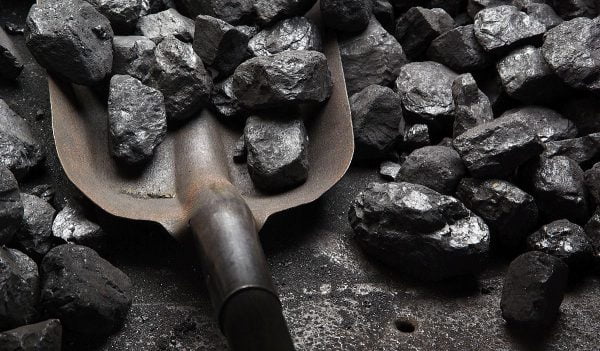

Government has warned that it will repossess dormant coal concessions as Zimbabwe elevates coal to the status of a special critical mineral amid renewed global interest in the resource and growing concerns over energy security.
The move comes as major economies, including the United States, revive coal-fired generation capacity despite international pressure to transition away from fossil fuels.
Authorities say Zimbabwe can no longer afford to have strategic coal resources lying idle at a time when demand for reliable baseload power continues to increase.
The latest position was outlined by Mines and Mining Development Minister Dr Polite Kambamura, who warned holders of inactive coal claims that government would move to reclaim the assets.
“Those that are sitting on coal assets for many years, unfortunately, government is going to take back those coal possessions,” Dr Kambamura said.
He said Zimbabwe intends to leverage its vast coal reserves to strengthen domestic energy security and position itself as a major regional power exporter.
“I encourage mining companies to partner government in the development of coal energy, considering our vast coal deposits. We will be giving incentives to those who come forward to show interest in developing our coal assets,” he said.
Dr Kambamura criticised what he described as contradictions by developed nations that advocate for reduced coal consumption while simultaneously reviving coal-fired generation in their own countries.
“In the global arena, they are talking about climate change. But back in their own countries, they are resuscitating those coal-powered thermal plants.
“So we said our coal is now a special critical mineral for us, so that we can unlock that value, be energy-sufficient and become a net exporter of energy. Zimbabwe is not going to be a spectator but an active player in the entire matrix, with a loud voice for a just energy transition,” Dr Kambamura said.
He said Zimbabwe remains open to investors bringing capital, technology, expertise, markets and innovation, adding that the success of investors directly contributes to national economic growth.
Mining has become the backbone of Zimbabwe’s economy, contributing about 81% of export earnings and approximately 15% of gross domestic product.
Dr Kambamura said government would continue to maintain a stable and predictable regulatory framework while safeguarding national interests.
“In pursuit of this objective, we shall continue engaging industry, financial institutions and other stakeholders to ensure that Zimbabwe remains competitive while protecting national interests,” he said.
He added that investors, financiers and communities increasingly expect high standards of environmental, social and governance compliance, stressing that the country’s mining growth must be anchored on responsible and sustainable practices.
According to Dr Kambamura, rising output across various mineral subsectors reflects deliberate policy interventions, investment promotion measures and reforms aimed at improving the ease of doing business.
He said Zimbabwe must now move beyond extraction and accelerate beneficiation and value addition.
“The challenge is whether we can transform our mineral endowments into industrial capacity, jobs, exports, infrastructure, technology and sustainable national prosperity.
“Our beneficiation strategy is founded on one simple principle — local value creation beyond extraction,” he said.
Kambamura also highlighted progress in the lithium sector, where government has progressively shifted from raw ore exports towards downstream processing.
“Our objective is to develop capacity in lithium sulphate, lithium carbonate and other high-value lithium products that can position Zimbabwe within global mineral value chains.
“The recent shipment of battery-grade lithium sulphate by Prospect Lithium Zimbabwe marks a historic milestone not only for Zimbabwe but for Africa as a whole. It demonstrates that beneficiation is achievable where policy certainty, investor commitment and government support converge,” he said.
Zimbabwe exported more than 1.1m tonnes of spodumene concentrate in 2025.
“The lesson is clear. Value, not volume alone, must drive the future of our mining sector. I am worried about volumes without value. I would rather work with smaller volumes of high-value products. Volumes and values should be knitted together,” Dr Kambamura said.
He said the same philosophy applies across the entire mining value chain, arguing that Zimbabwe’s substantial platinum group metals and chrome resources provide opportunities for refining, ferrochrome production, stainless steel manufacturing and broader industrialisation.
“As the world transitions towards cleaner technologies, Zimbabwe intends not only to supply raw materials but to participate meaningfully in value chains associated with critical and transition minerals.
“Last month, we classified our minerals into strategic, critical and special critical minerals,” Dr Kambamura said. – (Business Times)


