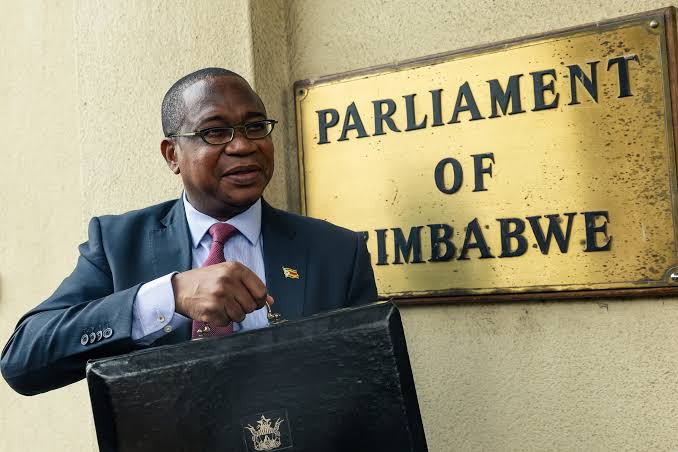

Government has unveiled a raft of fiscal measures targeting the mining sector, including a revised royalty framework for diamonds, adjustments to the application of gold royalties and tighter valuation rules for lithium exports under the 2027 National Budget.
Presenting the budget proposals, Treasury said the reforms are intended to ensure that Zimbabwe derives greater value from its mineral resources while maintaining the competitiveness of the mining industry.
On diamonds, Government said the global industry is facing growing pressure from synthetic alternatives.
“The growing availability of these alternatives has intensified competition, exerted downward pressure on natural diamond prices and weakened demand for naturally mined diamonds, thereby affecting the profitability and competitiveness of diamond-producing countries,” Treasury said.
Government has therefore proposed a new royalty structure under which diamonds valued below US$100 per carat will attract a 5% royalty, while the incremental value above US$100 per carat will continue to attract a 10% royalty. Treasury said the review is necessary to ensure that “the royalty regime remains responsive to prevailing international market conditions, supports the viability and competitiveness of domestic diamond mining operations, and safeguards the long-term contribution of the sector to national revenue”.
Turning to gold, Government proposes that the 10% mineral royalty be charged only on the incremental value above a prescribed price of US$5,000 per ounce. Treasury stated: “I, further, propose that the 10% mineral royalty on gold be charged on the incremental value above the prescribed price of US$5 000 per ounce.”
The Budget notes that high gold prices have become an important source of economic growth and foreign currency earnings. Government further highlighted the success of the Gold Incentive Framework, particularly among small-scale miners.
“The Gold Incentive Framework has been successful in supporting the growth and formalisation of the country’s gold sector, particularly among small-scale miners, who now account for more than 60% of national gold deliveries,” Treasury said.
While no new lithium royalty rate has been announced, Government is proposing significant changes to the valuation framework used to assess royalties, export tax and the Corporate Social Responsibility Levy on lithium exports.
Treasury said: “To ensure that Government derives an equitable share of revenue from the exploitation of lithium resources and to curb revenue leakages arising from the export of lithium concentrates at values that do not fully reflect their downstream processing potential, I propose to strengthen the valuation framework for purposes of assessing mineral royalties, export tax and Corporate Social Responsibility Levy (CSRL).”
Under the proposal, export tax on lithium concentrate will be calculated using the gross fair market value of the equivalent lithium sulphate recoverable from the concentrate. Government argues the measure will better reflect the mineral’s downstream value and support its beneficiation agenda.
The reforms come as Government continues to push for increased local mineral processing. The Budget notes progress in lithium beneficiation, including the commissioning of a lithium sulphate plant by one of the country’s major lithium producers, while chrome smelters are developing captive power plants to support value addition.
Mining remains one of Zimbabwe’s key economic sectors and is projected to grow by 5.1% in 2027. Treasury said the latest fiscal measures are part of broader efforts to strengthen revenue mobilisation, promote beneficiation and increase the sector’s contribution to economic transformation.