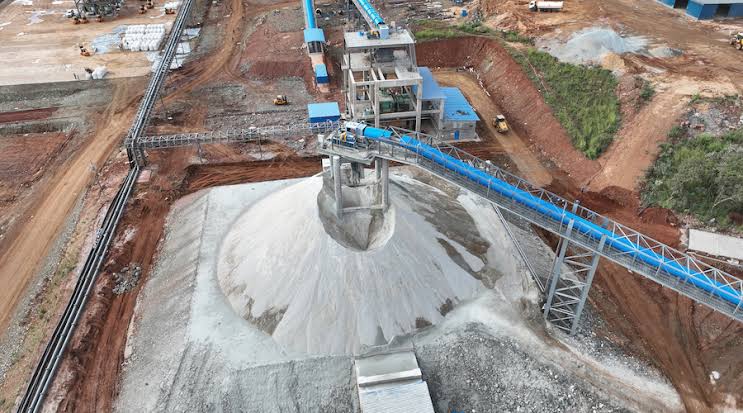

Zimbabwe’s lithium mining industry has called for a six-month delay to the planned ban on lithium concentrate exports, proposing that implementation be moved from January 2027 to July 2027 to give producers time to complete beneficiation plants currently under construction.
The request is outlined in the Chamber of Mines of Zimbabwe’s latest State of the Mining Industry Survey Report, released on November 16. According to the report, producers fear that enforcing the ban as scheduled could result in up to 1.4 million tonnes of lithium concentrate accumulating without access to export markets.
Mining companies argue that several key processing facilities required to support the government’s value-addition agenda are not expected to be fully operational until mid-2027.
Among the projects still under development are lithium sulphate plants at Sinomine-owned Bikita Minerals and Sichuan Yahua’s Kamativi Mining Company. Currently, Arcadia Lithium Mine, owned by Zhejiang Huayou Cobalt, remains the country’s main producer with an operational lithium sulphate processing facility.
The miners say concentrate exports remain critical in generating revenue needed to complete the capital-intensive beneficiation projects. A premature export ban, they argue, could place pressure on cash flows and slow the transition towards local processing.
Despite the industry’s concerns, the Chamber projects lithium sulphate production will rise significantly to 208,000 tonnes in 2027 from an estimated 63,000 tonnes in 2026 as new processing facilities come online.
Government, however, appears determined to maintain the January 2027 deadline. Speaking at a Ministry of Mines and Mining Development strategic planning workshop in Kadoma earlier this month, Mines and Mining Development Minister Polite Kambamura reaffirmed the government’s commitment to ending lithium concentrate exports as part of broader efforts to increase local value addition.
The export ban is a key component of Zimbabwe’s strategy to capture greater value from its vast lithium resources and strengthen its position in the global battery minerals supply chain.
The industry’s appeal sets up a critical policy debate between government ambitions for rapid beneficiation and miners’ calls for a more gradual transition that aligns with the completion of processing infrastructure.