

Zimbabwe’s mining industry is entering the 2027 National Budget consultations with an increasingly urgent call for fiscal reform, as diamond and lithium producers argue that the country’s royalty framework no longer reflects current market realities and is threatening the viability of major mining operations.
The debate has emerged at a critical moment for the sector. While diamond producers are seeking a sharp reduction in royalties amid a prolonged downturn in global prices, lithium miners are warning that Zimbabwe’s ambitions to develop local beneficiation and downstream processing could be undermined unless the royalty burden is eased.
The concerns place Finance Minister Professor Mthuli Ncube’s 19 November 2026 budget presentation under intense scrutiny, with industry stakeholders viewing it as the key opportunity to reset a fiscal regime they say was designed for periods of high commodity prices but is proving difficult to sustain during weaker market conditions.
At the centre of the dispute is the structure of mining royalties, which are levied on gross revenue rather than profitability. Unlike income tax, royalties are charged before miners deduct operating costs such as wages, electricity, fuel, equipment and processing expenses.
Industry leaders argue that while such rates may be manageable during periods of strong prices, they become increasingly burdensome when commodity markets weaken.
The pressure is most visible in the diamond sector, where Zimbabwe’s industry has experienced a dramatic contraction over the past year.
Two of the country’s three diamond producers, Anjin Investments and Murowa Diamonds, have suspended operations, leaving the Zimbabwe Consolidated Diamond Company (ZCDC) as the sole active producer.
Anjin Investments placed its Chiadzwa operations under care and maintenance in March 2026, citing the prolonged downturn in global diamond markets. The suspension followed a period of financial strain marked by falling prices, subdued demand, competition from synthetic diamonds and labour unrest linked to unpaid salaries.
The situation deteriorated further in May when RioZim owned Murowa Diamonds halted production at its Zvishavane mine amid mounting financial challenges. The company struggled to meet obligations to workers and creditors, while power supplies had earlier been disconnected over unpaid electricity bills.
Despite recording a rebound in output during the first quarter of 2026 after adopting in-pit mining methods, the recovery proved insufficient to offset broader financial pressures.
Murowa’s difficulties culminated in the adoption of voluntary corporate rescue proceedings in July, providing temporary protection from creditor action while efforts were made to restructure the business.
Against this backdrop, the Chamber of Mines of Zimbabwe has intensified its lobbying for royalty relief.
The Chamber is proposing a reduction in diamond royalties from the current 10 percent to 2 percent at prevailing market prices or, alternatively, the introduction of a price-linked royalty model similar to the sliding scale adopted for gold producers.
The Chamber has also called for a reduction in licensing fees for diamond X-ray equipment from US$50,000 to US$10,000 per machine, arguing that the current charges increase operating costs at a time when the industry is already under severe financial stress.
Industry representatives argue that the current royalty burden has become increasingly difficult to sustain because of the steep decline in global diamond prices.
According to figures presented by the Chamber, rough diamond prices have fallen by approximately 74 percent from around US$72 per carat in 2020 to about US$22 per carat. Weak demand in key markets such as the United States and China, competition from lab-grown diamonds and broader geopolitical uncertainty have all contributed to the downturn.
The decline has created a challenging paradox for Zimbabwe’s diamond industry. Kimberley Process statistics indicate that while the country’s diamond output increased between 2022 and 2024, the value generated from production declined sharply, highlighting the extent to which lower prices have eroded revenues.
Mining executives argue that maintaining a flat royalty rate regardless of market conditions places producers under additional pressure when margins are already being squeezed.
The industry’s concern is that without intervention, the remaining producer, ZCDC, could face similar challenges, while idle operations may struggle to justify restarting production.
A similar debate is unfolding in Zimbabwe’s rapidly expanding lithium sector.
Producers are seeking a reduction in royalties on lithium sulphate and lithium carbonate from 7 percent to 3 percent, arguing that the current framework weakens the business case for local processing investments.
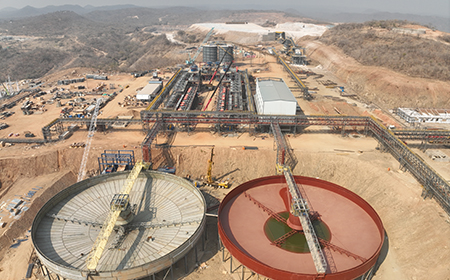
Kamativi Lithium Mine Assembly Line
The request comes as Zimbabwe seeks to move beyond the export of raw lithium concentrates and establish itself as a regional hub for value addition.
However, miners contend that imposing relatively high royalties on beneficiated products effectively penalises companies that invest in processing facilities, contrary to Government’s industrialisation objectives.
The convergence of concerns from both diamond and lithium producers has elevated the broader question of whether Zimbabwe should adopt a more flexible royalty regime tied to commodity price movements.
Industry leaders argue that such a system would provide relief during market downturns while allowing Government to benefit from higher revenues when prices strengthen.
The decision facing policymakers is therefore larger than a debate over individual mineral sectors.
It is increasingly becoming a test of whether Zimbabwe’s mining fiscal framework can adapt to changing market conditions while preserving production, employment and investment.
With two diamond mines already inactive and major lithium investments dependent on favourable economics, the 2027 National Budget is expected to provide a crucial indication of how Government intends to balance revenue generation with the competitiveness of one of the country’s most important export sectors, mining.